


.svg)
Glass installation is the final touch to an interior. Since tempered glass cannot be cut or adjusted on-site, any error of 2–3 mm during the preparation phase can be critical.
For the installation of glass partitions, doors, or shower enclosures to go smoothly, the premises must be prepared according to strict technical regulations. Let's break down step-by-step what needs to be done before the installation team arrives.
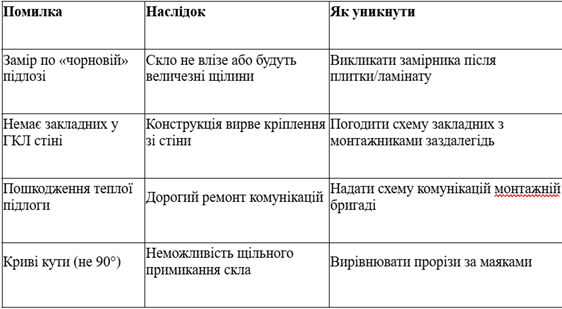
The main rule: manufacturing is based on "final" readiness. Any unagreed changes after the engineer's visit (for example, laying tiles or an additional layer of plaster) will render the manufactured glass unsuitable for installation.
What needs to be completed:
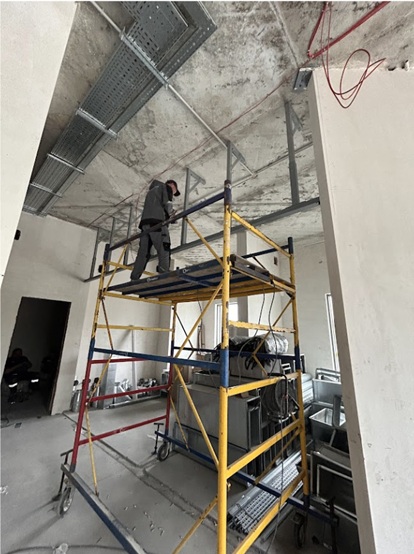
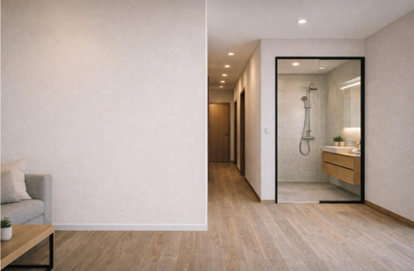
Glass structures highlight any wall curvature. Therefore, the requirements for opening geometry are very high:
Glass panels are heavy (1 m² of 10 mm tempered glass weighs approximately 25 kg). Unreinforced plasterboard partitions and stretch ceilings cannot support such weight.
Requirements for Embedded Elements:
This is the most common cause of conflict during installation.
Glass is a bulky material. Prepare the logistical path:
Can glass be attached to a stretch ceiling?
Only if a rigid embedded element (beam or channel) is pre-installed under the film, and cutouts are made in the film. Direct attachment to the film is not possible.
What to do if the walls are already painted but there are no embedded elements?
In some cases, special bracing systems or chemical anchors can be used, but this requires a separate engineering calculation.
Proper room preparation saves up to 30% of the budget, as it prevents wasted trips by the installation team and the re-manufacturing of expensive tempered glass. Precise geometry and reliable embedded elements are the key to ensuring your glass structure operates smoothly and safely for decades.


.jpg)
.jpg)
.jpg)
.jpg)

.jpg)
.jpg)


